Highlighting
Our Versatility
This is the space to introduce the Project section. Take this opportunity to give visitors a brief overview of the types of projects they'll find featured in the showcase below. Consider adding an image or video to spark their interest.
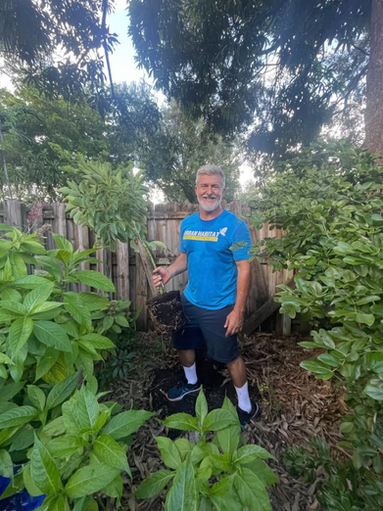
Eleven years ago, this property was little more than a lawn with a single mango tree.
Today it is a thriving urban microforest.
Designed and built as a prototype, this project demonstrates how native landscapes can restore biodiversity, cool urban environments, and transform the way cities manage water.
Instead of sending stormwater into drains, this landscape captures, filters, and stores rainfall directly on site.
The system mimics the historic ecological processes that once recharged South Florida’s aquifer.
By allowing freshwater to infiltrate the soil and move through the landscape, projects like this help maintain the natural pressure that pushes saltwater back toward the ocean.
Over the past decade, the forest has grown into a complex habitat filled with native trees, understory plants, and wildlife.
Visitors often find it hard to believe that this place is not a natural forest. Few imagine that just eleven years ago it was an open lawn.
Today, thick mulch paths invite exploration through this hidden ecosystem, where shade, biodiversity, and water come together to create a living landscape.
Like all forests, it evolves over time. After more than a decade of growth, the system is now undergoing deep ecological maintenance, including the restoration of the sinkhole lagoon that anchors the hydrology of the site.
Soon the stream and waterfalls will return to their original flow, continuing the cycle of water, soil, and life that this microforest was designed to sustain.

A glorious golden hour in South Miami.
Miami-Dade pine rises to restore the historic tree line while native goldenrod erupts in brilliant yellow, alive with honeybees gathering nectar in the warm late-day light.
Coral boulders anchor the landscape like the frame of a living painting a garden designed not only for beauty, but for biodiversity.
.jpg)
Four years ago, Commissioner Carol Keys and Urban Habitat planted 300 Miami-Dade pine trees behind the North Miami Police Station after a conversation with the Chief of Police about how trees scientifically reduce crime and improve public health.
At the time, they were tiny one-gallon trees.
Today, they stand 10 to 30 feet tall.
This is how we change the future.
Miami-Dade pine grow rapidly, create habitat for birds, improve air quality, and help restore the historic pine rockland ecosystem that once defined South Florida.
Planting thousands and eventually millions of these trees is one of the most effective and economical ways to restore Miami’s tree canopy while increasing climate resilience.
With Urban Habitat’s ecological planting methodology, small trees planted intelligently today become the forests that protect cities tomorrow.

Today marked a powerful step toward creating an outdoor ecological classroom for students.
Together with dedicated teachers and enthusiastic students, the Urban Habitat team helped transform this space into a living prairie, wildflower garden, and butterfly habitat filled with native plants.
As students planted, butterflies and birds began to arrive a reminder of how quickly nature responds when native ecosystems are restored.
Experiences like this inspire the next generation to understand and protect the natural world.
.jpg)
This project in Cooper City demonstrates how native planting can transform an existing landscape into a vibrant ecological design.
Blanket flowers and sea lavender were used to echo the tones of the natural stone facade, bringing new life to an architectural element that many would simply paint over in today’s rush toward uniformity.
Instead of erasing the character of the stone, the landscape celebrates it allowing color, texture, and biodiversity to elevate the architecture naturally.
This approach reflects Urban Habitat’s philosophy: landscapes should not hide what is naturally extraordinary, but reveal and celebrate it
.jpg)
NUESTROS PROYECTOS
Construimos proyectos que perduran
Lo que nos distingue
Vea los aspectos más destacados de nuestros proyectos en el sur de Florida, incluidos North Miami, Biscayne Park, Coral Gables, Kendall, Fort Lauderdale y Cooper City, y únase a nosotros en Instagram para obtener actualizaciones continuas, avances detrás de escena y nuevas transformaciones de jardines.
Nuestro trabajo reemplaza el césped y el césped artificial con vibrantes plantas nativas de Florida que restauran la biodiversidad, aportan un color inesperado y promueven ecosistemas prósperos. Desde bosques de alimentos y huertos hasta hábitats para mariposas Atala, restauraciones de pinos en peligro de extinción y arbustos de bayas amigables con las aves, cada proyecto demuestra cómo los paisajes nativos revitalizan nuestras comunidades.